Showing posts with label culture. Show all posts

Sunday, December 16, 2018

Chinese Exclusion Repeal Act Remembered


Above: Former United States Ambassador to China Gary Locke spoke at the commemoration of the 75th Anniversary of the Chinese Exclusion Repeal Act on Sunday.

“Legislation matters, and so does its reversal….let’s send that message.” - Beth Takekawa, executive director of the Wing Luke Museum

By Janine Gates
Little Hollywood

It was a day of intensely personal and poignant storytelling at an event commemorating the 75th Anniversary of the Chinese Exclusion Repeal Act.

The program was held at the Wing Luke Museum of the Asian Pacific American Experience in Seattle on Sunday.

Stories about the impact of racist and discriminatory federal policies were told in first person by Bettie Luke, sister of Wing Luke, and many others.

Wing Luke, a civil rights attorney, served as a Seattle city councilmember from 1962 until his death in 1965. He was the first Asian American to hold elected office in Washington State.

The Chinese Exclusion Act of 1882 banned the immigration of Chinese to the United States. It also prohibited Chinese from becoming naturalized citizens. 

Native born Chinese American citizens could face exclusion if they left the United States and tried to return. When they returned, they faced extensive interrogations.

Subsequent legislation extended and further restricted Chinese immigration and promoted anti-Chinese sentiment and violence.

The repeal act is known as the Magnuson Act of 1943, named after Senator Warren G. Magnuson who proposed it when he was a member of the House of Representatives.

Even when repealed, only 105 Chinese per year were allowed to enter the United States until 1965.

The exclusionary policies impacted Chinese opportunities for housing, property ownership and employment for decades. 

Many speakers described that those policies can still be felt in their families today.

Above: Bettie Luke, sister of Wing Luke, relates her family history while Lorraine Lee, center, and Connie So listen. Lee is chief administrative law judge of the Washington State Office of Administrative Hearings and was a former policy advisor to Governor Locke. So is principal lecturer of American Ethnic Studies at the University of Washington, among other positions.

Bettie Luke said she did not hear stories or know much about her heritage while growing up. She described the impact that lack of knowledge had when her mother died.

“You’re caught in this dilemma where you’re told that the ideal is the more American you become, the better accepted that you would be….On the other hand, throw away your culture…. It’s such a push and pull.

“When my mother died, I asked my elders, ‘What do I need to do for her funeral?’ And, caught in the push and pull dilemma, they said, ‘Oh, we don’t do those things anymore.’ And I thought, ‘What? She was so Chinese!’

“I wanted to make sure that she got a farewell that was Chinese. So, I had to ask and ask and ask….It’s so heartbreaking to have to throw away your culture. And so many of us lived that promise that the more white American you became the more you would be accepted and that’s such a loss.

“…Women are the keepers of the culture and there’s so much that was lost, so much that we did not learn….Our family did not know the name of mother's village or the name of our father’s village.

They located a relative who did know and were able to connect with her mother’s family. Luke said she then found out that her mother once had eight brothers, but three had died of starvation.

Her voice breaking, Luke said that realization was a stab in the heart and personalized why her parents had worked so hard.  

“They had an entire compound of relatives that they supported so that they could live....that carried on for a long, long time….I was a child and did not hear the stories. I wonder now about the following generations. What do they care about? I want us to continue learning lessons….”

Gary Locke, former United States Ambassador to China and Washington State Governor, also spoke about his family history and the need to show compassion and fairness toward immigrants.

Saying he didnt plan on speaking, Locke addressed some sensitive topics head-on.

Mentioning President Trump’s efforts to stop those coming to the United States and deport those who are here, Locke expressed concern with the rise in prejudice and discrimination.

“Our history is filled with prejudice against every wave of foreigners and immigrants that have come here to this country. We need to remember that and celebrate the successes we have had but use that celebration to renew our determination to prevent others from facing that same discrimination and prejudice.

“How is it that so many Chinese were able to come to American despite the Chinese Exclusion Act? It’s because so many of our ancestors claimed they were U.S. citizens or born to U.S. citizens, but the records had been destroyed in San Francisco in the fire.

“And many of our relatives claimed to be U.S. citizens or sons and daughters of U.S. citizens. Why? Because they were paper sons, paper daughters. Many of my relatives came to the United States as paper sons and relatives. Families --U.S. citizens -- would go back to China and then another family would pay to claim the son or daughter as the offspring of that U.S. citizen so they could come in.

“So, sometimes the Chans were not really a Chan but a Lee and the Lees weren’t really Lee but a Locke. And the Lockes weren’t really a Locke but maybe they were a Woo. So, we, among our own people, have come here illegally....

“So, before we go around saying, ‘Let’s kick out all those immigrants that are here illegally, improperly, we need to look at ourselves....

“And why is it that even when the Japanese were incarcerated during World War II, soldiers volunteered to serve in the United States Army when their parents and their brothers and sisters were behind barbed wire concentration camps?

“Why is it that African Americans, facing so much segregation in America, signed up to fight in World War II as part of the Tuskegee Airmen and others, even though back home they faced such terrible discrimination? Also, Native Americans, and the list goes on. It’s because they believed in the essential goodness and destiny of America.

“We are not a perfect country. But we hold ourselves up with high ideals and that’s why people of all generations come to America. We in America are all foreigners or immigrants, whether we’re first generation or tenth generation, except for the Native Americans. We are all foreigners.

“And what has made America great through all these centuries is that beacon of hope and opportunity that has attracted generation after generation of people…whether our ancestors came on the Mayflower or a slave ship or on a boat from China.

“…. We’ve all sacrificed and given our blood, sweat and tears for this country, and therefore when we see injustices being perpetuated against other populations and other ethnic groups, it is our duty, it is our responsibility to stand up for them.

“…. This is a celebration because 75 years ago we repealed this racist act and it was a person from this state who then became a U.S. senator who was responsible for that. So, we have much to be proud of, not only in terms of our own ethnicity but the history of this state in correcting racist acts and prejudicial acts.

Locke then related the story of his grandfather who came over from China and worked as a houseboy in Olympia and later as a chef at Virginia Mason Hospital.

Locke said it was Doctor Mason who told Locke’s grandfather to bring his family to America. When he did so, his grandfather and family members were held in detention at the immigration facility.

“It was Doc Mason who went down to the immigration center to vouch for my grandfather, and got grandfather, my father, and my uncle out….Act of courage. Act of kindness.

“We need to remember that and...show that same compassion and commitment to diversity and fairness to all other groups in America. Let’s celebrate, let’s learn more about our history and our past, and let’s continue to fight,” said Locke.

Staff members with the National Archives at Seattle’s Sandpoint Way office also spoke and encouraged those interested in genealogy to use their database and research expertise. 

Much can be learned in the interrogation interviews and marriage, birth and death records of Chinese immigrants and others, they said.

Hao-Jan Chang of Bellevue said he has documented 24 generations of Gary Locke’s ancestry to the year 1275.

The Chinese American Citizens Alliance (Seattle Lodge) co-organized Sundays event.

Correction, December 17, 2018: Bettie Lukes mother had eight brothers, not eleven, as originally reported.

Friday, October 16, 2015

Old Brewhouse Foundation Provides Solutions To Save History


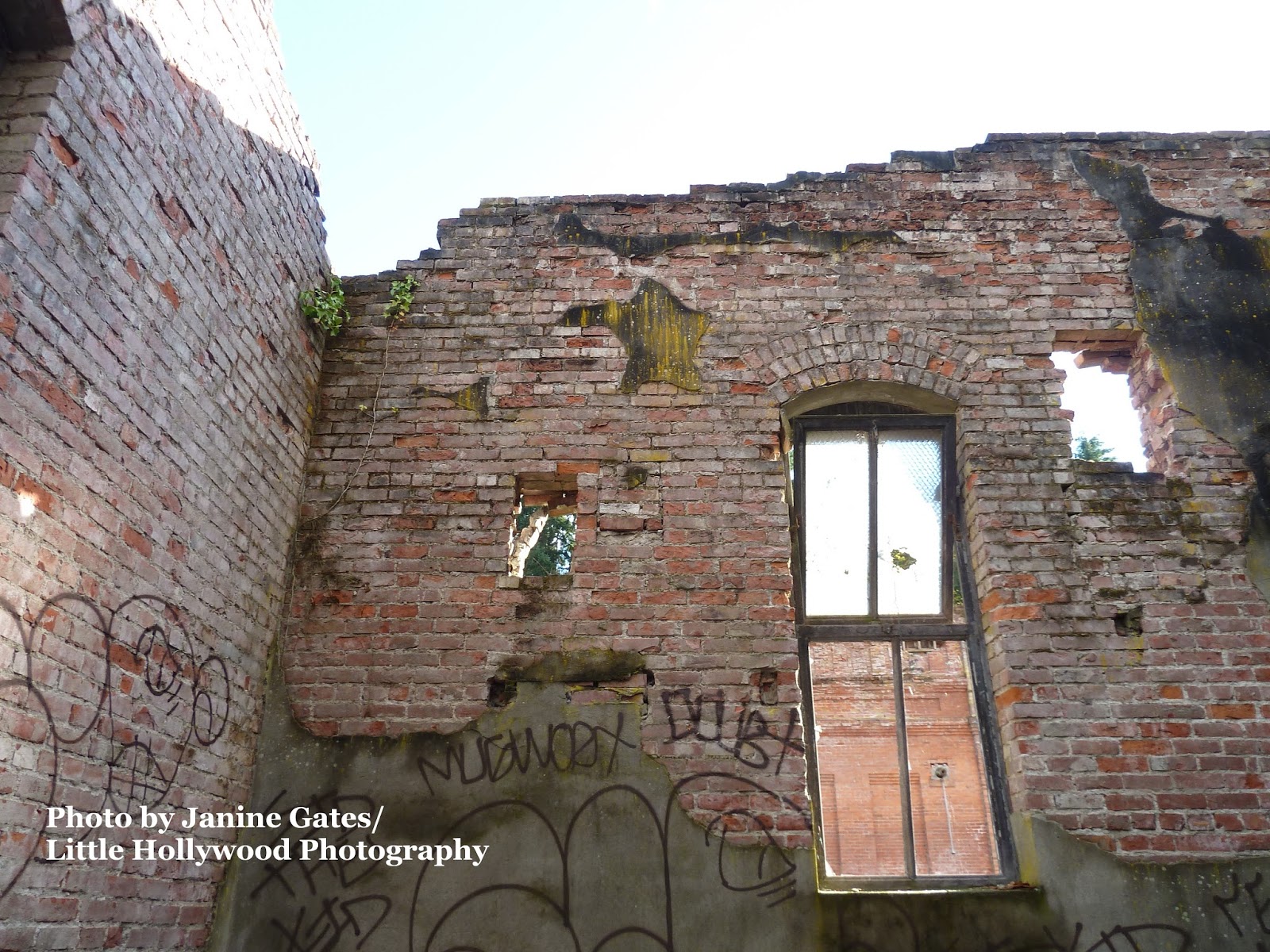
Above: Structural repair and rehabilitation is needed in order to meet current building standards and prevent further deterioration and damage to Tumwater’s historic Brewhouse tower. The six story tower, as seen this week from Tumwater Falls Park, is 10,000 square feet in size with the entire facility encompassing 100,000 square feet. 

By Janine Gates

The Old Brewhouse Foundation was formed in 2008 as a nonprofit organization to bring together groups and individuals to develop a plan for the acquisition, restoration, and public use of the Old Brewhouse area.  

Their next meeting, which is open to the public, is Saturday, October 17, 10:30 a.m., at the Tumwater Timberland Library.

In August, the Foundation briefed the Tumwater city council at a work session on the group’s efforts. Among other suggestions, the group is proposing that the public purchase the entire brewhouse facility through a 20-year bond of $100 million over 20 years funded by a property tax. 

The Brewhouse tower and surrounding buildings are still viable structures, but need new roofs, seismic retrofits, and additional improvements.  At the very minimum, weather-proofing the buildings is necessary to include adding new roofs and windows to preserve the structures.

According to the Foundation, the initial brewhouse restoration is estimated to be $5.6 million, which reflects the cost of acquisition. The likely acquisition cost is a rough estimate of $2.5 million and includes some assumptions for project management costs.

No action is possible as long as the current owner, George Heidgerken, owns the building. Very little activity has occurred since his acquisition of the property about five years ago. The building's deterioration is reaching a point of no return, says the Foundation.

It is not known if George Heidgerken or his company, Falls Development, LLC, is interested in selling the property.

Above: The Old Brewhouse Tower and related buildings are in serious disrepair. Photo taken October 18, 2014.

Little Hollywood recently asked Rob Kirkwood, president of the Old Brewhouse Foundation, for specifics on the group's suggestions and interest in the property.

Kirkwood: George Heidgerken is still the owner of the Old Brewhouse property. The Old Brewhouse Foundation is asking the county to place the creation of a special purpose district and a property tax of about $0.35/$1,000 on the ballot.  The mission of the special purpose district would be to purchase and rehab the 1906 brewery complex into museums, art galleries, public gathering spaces and meeting rooms, large and small, over a period of many years.  We will ask Heidgerken about selling the property when we have a better idea about the county commissioners willingness to place the issue on the ballot.

Little Hollywood:  Please describe the group's idea of "rehab." Due to the condition, would the tower building be deconstructed and reassembled on site or in a different spot to accommodate this vision? It seems that everything you've described is similar to Heidgerken's vision. It seems there are multiple problems with that vision because of the location. Please explain.

Kirkwood: I agree there are multiple problems - all great community projects have challenges. Public recognition of the opportunities and challenges will create a facility that the community can be proud of.  The tower has been assessed by a structural engineer as actually in pretty good shape despite what you see.  It is built of concrete and brick, both materials that weather better than the wood roofs did.  It will require some major repairs and seismic retrofitting, but disassembly won't be necessary. Our project will be of a smaller scale than what Heidgerken is proposing. 

The Planned Action EIS that Tumwater prepared proposed three different levels of activity: 1. Do nothing; 2. Development within the existing foot print; 3. Expanding the foot print.

Heidgerken's published plans are at a strong Level 3 because the additional space is needed to create the synergy of commercial activities and support the private development of utilities, access and parking expenses. 

Our plan is closer to Level 2 - we would stay within the existing foot print other than building some level of parking facilities. Using public financing allows the triple bottom line of economic, social and environmental success. The atmosphere would be more like a college campus instead of the traffic required for commercial activity.  The site does present challenges, but also some incredible opportunities. Our outreach at community events keeps finding people that are excited about museums, art studios, the brewery distillery institute and large public gathering spaces. 

According to the Foundation, and the meeting minutes of the August 25 work session, the first element of their plan would cost approximately $45 million in investment that could be converted to a countywide levy at $.30 to $.35 per $1,000 of assessed valuation costing the average homeowner of a $250,000 home approximately $75 to $87.50 annually.

During information sharing at public events, the response has been positive with most people conveying a willingness to pay the levy, says the Foundation.

Cynthia Stewart, another Foundation member, reviewed the possibility for the councilmembers of a bond issue of $100 million for inclusion of the large warehouse to be paid at six million for the next 20 years. The bond presents some challenges and includes different options as there is no available special district option that fits this specific scenario.

One of the options is a Park and Recreation Service Area (PRSA). Categories allowed by state statute are broad and include park, recreation facilities, and senior centers. Under that scenario through a countywide financing option, it would require all Thurston County cities to agree to participate and it would require a separate vote by the public. It would require a super majority, 60 percent, to pass.

A second option is under the Cultural Access Program recently passed by the Legislature. The option allows a 1/10th of one percent increase in sales tax countywide. The option wouldn’t generate as much money. The PRSA statute is broad and could entail the entire complex to include trails. The option is more indirect as it focuses on culture and population.

Stewart said the county commissioners have expressed interest in the proposal.

Above: The interior of the long building on the property that was built as a pulp mill could be used for high school reunions, weddings, and other special events, says the Foundation. The facility is 21,000 square feet and is 300 feet long and 70 feet wide.

For more stories and pictures of the Old Brewhouse, go to Little Hollywood, www.janineslittlehollywood.blogspot.com, and type key words into the search button.

Sunday, October 5, 2014

Arts Walk and Arab Festival Offer Culture


By Janine Unsoeld
www.janineslittlehollywood.blogspot.com

The weather cooperated all weekend, and Arts Walk continued on Saturday in downtown Olympia, with some exhibits scheduled to be on display throughout the month. The pace on Saturday was quieter, and allowed more time to see art and speak with artists about their work.
 
Above: Pianist Luke Davis, 16, played outside Browser’s Bookstore on Capitol Way for Arts Walk. Davis said he’s been playing for eight years and has participated at Arts Walk for six years. He attends Black Hills High School. He says donations are going toward his college fund, and parts for his car. “My window isn’t staying up,” he said.

Above: Members of Shahrazad dance Ensemble of Seattle perform at the Olympia Arab Festival yesterday at The Olympia Center.

The Olympia Arab Festival

Coinciding with Arts Walk was the Olympia Arab Festival, sponsored by the Rachel Corrie Foundation for Peace & Justice.

The theme of its second annual event was “Shuruq II,” which means sunrise. In a celebration of Arab culture, the event featured food, performances, speakers, and children’s activities.

Rachel Corrie, Olympia, was killed in the Gaza Strip in 2003 as she tried to prevent the demolition of the home of two Palestinian families.
The Rachel Corrie Foundation was established by Rachel’s family to continue the work that she hoped to accomplish. The Foundation conducts and supports programs that foster connections between people that build understanding, respect and appreciation for differences.
Above: Laith Amireh, 20, of Amman, Jordan, attends Bellevue College and is taking courses in computer science and programming. He says he enjoys being part of the Arabic Culture Student Association, which has 138 members. For more information about the club, go to www.learnarabicculture.org. This is the club’s first visit to Olympia.

Above: The Olympia-Rafah Sister City Mural Project on Capitol Way and State Street in downtown Olympia. For taped recorded information about the wall and the artists, call (360) 252-9779.

Above: Omar demonstrates the fine art of Arabic coffee making at the Olympia-Rafah Mural today. The smell was irresistible. The result of just one cup made for a very productive afternoon and evening! The site at the mural featured a hookah lounge at last night’s Arts Walk.
For more information about the Rachel Corrie Foundation for Peace & Justice, go to www.rachelcorriefoundation.org.

Arts Walk is sponsored by the City of Olympia Arts Commission and the Department of Parks, Arts & Recreation with plenty of support by local businesses and artists. For more information about Arts Walk, go to www.olympiawa.gov/parks.