Showing posts with label finance. Show all posts

Wednesday, August 8, 2018

Funding the Cost of Olympia Homelessness


Above: Time is running out as the City of Olympia works to address homelessness crisis options before the cold weather season approaches. The clock, along with other debris, was recently collected and placed in trash bags at the Nickerson homeless encampment off Eastside Street in Olympia.


Total 2017 amount spent for encampment cleanup expenses is nearly $103,000

By Janine Gates
Little Hollywood

“We may all need to compromise,” said Olympia city councilmember Jim Cooper, who serves as chair of the council's finance committee.

Cooper was speaking of funding options for homeless response efforts and two proposed city sanctioned encampments at a four-hour city finance committee meeting held July 31.

The committee is comprised of councilmembers Cooper, Lisa Parshley and Jessica Bateman.

As Cooper has said in the past, city funding to address the homeless crisis is a new line of business for the council, and all options need to be considered.

The city estimates that $1.4 million will be needed annually to operate two city sanctioned homeless encampments. The two locations, one on Union Avenue near Plum Street and the other on Martin Way, will assist 80 people total. 

An estimated $1.1 million total is needed for site improvements to both locations.

City staff has also proposed to direct $500,000 annually to other homeless response efforts. This amount could support other agencies that host campsites under the citys proposed emergency housing ordinance for services such as garbage service and porta-potties. 

The need for safe storage has also been identified as a critical service so people experiencing homelessness have a place to store their belongings.

At the meeting, Cooper suggested using Home Fund money, a business and operations tax that has not been adjusted since the 1950s, dipping into parks funds, and using $500,000 to $1,000,000 per year of general fund emergency reserves for no more than five years.

And while he said he doesn’t want to raise taxes, he is open to using some of the non-voted utility tax, if that tax is extended an additional three years.

“The cost to parks and other agencies from this crisis is much higher (than past years). In fact, the cost to every department to deal with this crisis is at some level part of (staff’s) job…I believe a short extension on (parks) acquisition won’t hurt our city long term but it will help us relieve pressure on our park system,” he said.

One example of these higher costs is for homeless encampment clean-ups.

According to the city community planning and development figures, the cumulative expenditures incurred by city park rangers for homeless encampment clean-up at 24 citywide locations in 2017 totaled $13,820.46.

Other clean-up efforts were contracted out for cleaning up under bridges, drop box hauling, advanced environmental hauling, resulting in a total 2017 amount spent for encampment cleanup expenses of $102,991.04.

Councilmember Bateman expressed interest in using capital funds as long as there is a clear plan that includes transitioning a temporary shelter to long-term supportive housing.

She stated that she doesn’t want to touch general fund reserves because those are for emergencies, however, the homelessness crisis is an emergency, so use of those funds in that capacity seemed appropriate.

Councilmember Parshley wants to see a defined repayment plan if reserves are used.

Parshley also sought clarification on whether she needed to recuse herself because she has a veterinary business near the proposed homeless encampment on Union Avenue. She was told by city legal counsel that she can participate in the discussion but can recuse herself when it comes time to a final vote on the issue.

In his support for using funds from the new Home Fund sales tax for permanent supportive housing, Cooper said, “I really, truly believe that conditions on the ground have changed since we asked the voters to approve the Home Fund. They were changing in that time and we couldn’t articulate it as clearly as we can today.”

“Where we’re going to get the money from is premature if we don’t know how much it’s going to cost…. What we don’t want to do is provide for a plan for homeless encampments and not achieve the objectives we set out to achieve. We want to make sure…we’re on the right track,” said Bateman.

Bateman and Parshley questioned the site review, design and engineering costs for the two sites.

Cooper suggested putting two social service providers and a one or two people who are homeless on the city’s formal design team for operations and maintenance.

Staff appeared to agree, with city manager Steve Hall saying, “Nothing has been figured out.” 

That includes how it is determined who gets to stay in the encampments, which the city is calling “The Villages.” 

Bateman urged that the standard vulnerability index be used, as it is required for federal funding and considered a “best practice.”

Cooper said he understood that, but also believes in “best or better practices,” and wants to also look at other criteria for admission.

The full council will hold another study session on funding options to address the homelessness crisis on Tuesday, August 21, 5:30 p.m., Olympia City Hall.

Emergency Reserves

Debbie Sullivan, city administrative services director, told Little Hollywood this week that the city must keep a minimum of 10 percent of its general operating revenue in reserves.

The city currently has $7.8 million in its reserves, she said.

Reserves are important to financial advisers and determine the city’s credit rating, which affects its ability and cost to borrow money. If emergency reserves are used, they must be paid back with 2.3 percent interest.

“We are very, very, cautious about using our emergency reserves. If an emergency is declared, such as in the event of an earthquake, we have to access those reserves,” Sullivan said.

Little Hollywood often writes about homelessness issues, and unsheltered, street dependent individuals. For more information about these issues, the Home Fund, and the city’s recent purchase of property for housing the homeless, go to Little Hollywood  at www.janineslittlehollywood.blogspot.com and use the search button to type in keywords.


Friday, October 16, 2015

Old Brewhouse Foundation Provides Solutions To Save History


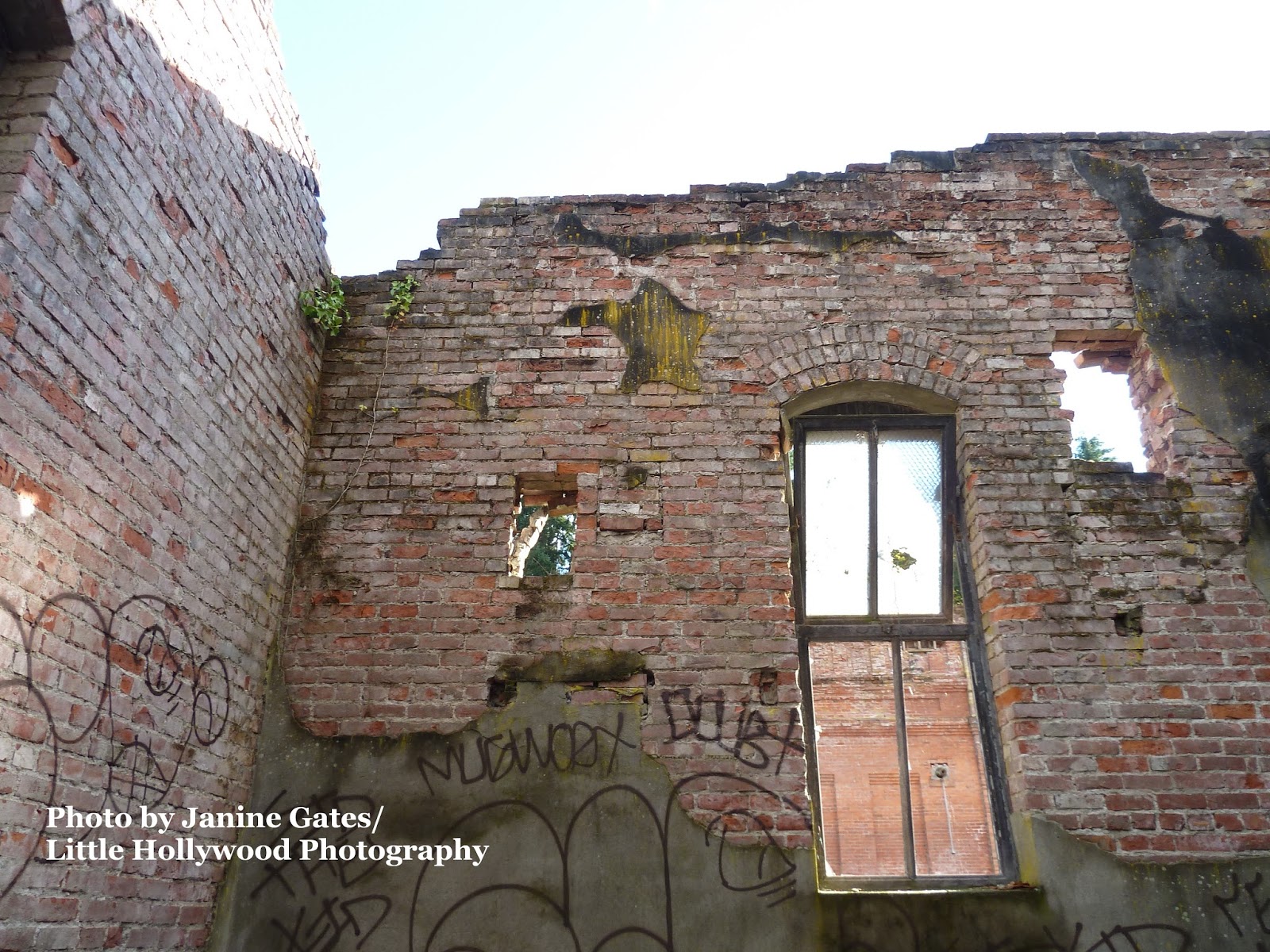
Above: Structural repair and rehabilitation is needed in order to meet current building standards and prevent further deterioration and damage to Tumwater’s historic Brewhouse tower. The six story tower, as seen this week from Tumwater Falls Park, is 10,000 square feet in size with the entire facility encompassing 100,000 square feet. 

By Janine Gates

The Old Brewhouse Foundation was formed in 2008 as a nonprofit organization to bring together groups and individuals to develop a plan for the acquisition, restoration, and public use of the Old Brewhouse area.  

Their next meeting, which is open to the public, is Saturday, October 17, 10:30 a.m., at the Tumwater Timberland Library.

In August, the Foundation briefed the Tumwater city council at a work session on the group’s efforts. Among other suggestions, the group is proposing that the public purchase the entire brewhouse facility through a 20-year bond of $100 million over 20 years funded by a property tax. 

The Brewhouse tower and surrounding buildings are still viable structures, but need new roofs, seismic retrofits, and additional improvements.  At the very minimum, weather-proofing the buildings is necessary to include adding new roofs and windows to preserve the structures.

According to the Foundation, the initial brewhouse restoration is estimated to be $5.6 million, which reflects the cost of acquisition. The likely acquisition cost is a rough estimate of $2.5 million and includes some assumptions for project management costs.

No action is possible as long as the current owner, George Heidgerken, owns the building. Very little activity has occurred since his acquisition of the property about five years ago. The building's deterioration is reaching a point of no return, says the Foundation.

It is not known if George Heidgerken or his company, Falls Development, LLC, is interested in selling the property.

Above: The Old Brewhouse Tower and related buildings are in serious disrepair. Photo taken October 18, 2014.

Little Hollywood recently asked Rob Kirkwood, president of the Old Brewhouse Foundation, for specifics on the group's suggestions and interest in the property.

Kirkwood: George Heidgerken is still the owner of the Old Brewhouse property. The Old Brewhouse Foundation is asking the county to place the creation of a special purpose district and a property tax of about $0.35/$1,000 on the ballot.  The mission of the special purpose district would be to purchase and rehab the 1906 brewery complex into museums, art galleries, public gathering spaces and meeting rooms, large and small, over a period of many years.  We will ask Heidgerken about selling the property when we have a better idea about the county commissioners willingness to place the issue on the ballot.

Little Hollywood:  Please describe the group's idea of "rehab." Due to the condition, would the tower building be deconstructed and reassembled on site or in a different spot to accommodate this vision? It seems that everything you've described is similar to Heidgerken's vision. It seems there are multiple problems with that vision because of the location. Please explain.

Kirkwood: I agree there are multiple problems - all great community projects have challenges. Public recognition of the opportunities and challenges will create a facility that the community can be proud of.  The tower has been assessed by a structural engineer as actually in pretty good shape despite what you see.  It is built of concrete and brick, both materials that weather better than the wood roofs did.  It will require some major repairs and seismic retrofitting, but disassembly won't be necessary. Our project will be of a smaller scale than what Heidgerken is proposing. 

The Planned Action EIS that Tumwater prepared proposed three different levels of activity: 1. Do nothing; 2. Development within the existing foot print; 3. Expanding the foot print.

Heidgerken's published plans are at a strong Level 3 because the additional space is needed to create the synergy of commercial activities and support the private development of utilities, access and parking expenses. 

Our plan is closer to Level 2 - we would stay within the existing foot print other than building some level of parking facilities. Using public financing allows the triple bottom line of economic, social and environmental success. The atmosphere would be more like a college campus instead of the traffic required for commercial activity.  The site does present challenges, but also some incredible opportunities. Our outreach at community events keeps finding people that are excited about museums, art studios, the brewery distillery institute and large public gathering spaces. 

According to the Foundation, and the meeting minutes of the August 25 work session, the first element of their plan would cost approximately $45 million in investment that could be converted to a countywide levy at $.30 to $.35 per $1,000 of assessed valuation costing the average homeowner of a $250,000 home approximately $75 to $87.50 annually.

During information sharing at public events, the response has been positive with most people conveying a willingness to pay the levy, says the Foundation.

Cynthia Stewart, another Foundation member, reviewed the possibility for the councilmembers of a bond issue of $100 million for inclusion of the large warehouse to be paid at six million for the next 20 years. The bond presents some challenges and includes different options as there is no available special district option that fits this specific scenario.

One of the options is a Park and Recreation Service Area (PRSA). Categories allowed by state statute are broad and include park, recreation facilities, and senior centers. Under that scenario through a countywide financing option, it would require all Thurston County cities to agree to participate and it would require a separate vote by the public. It would require a super majority, 60 percent, to pass.

A second option is under the Cultural Access Program recently passed by the Legislature. The option allows a 1/10th of one percent increase in sales tax countywide. The option wouldn’t generate as much money. The PRSA statute is broad and could entail the entire complex to include trails. The option is more indirect as it focuses on culture and population.

Stewart said the county commissioners have expressed interest in the proposal.

Above: The interior of the long building on the property that was built as a pulp mill could be used for high school reunions, weddings, and other special events, says the Foundation. The facility is 21,000 square feet and is 300 feet long and 70 feet wide.

For more stories and pictures of the Old Brewhouse, go to Little Hollywood, www.janineslittlehollywood.blogspot.com, and type key words into the search button.