Showing posts with label trees. Show all posts

Sunday, September 23, 2018

Sequalitchew Warehouse Public Hearing Set


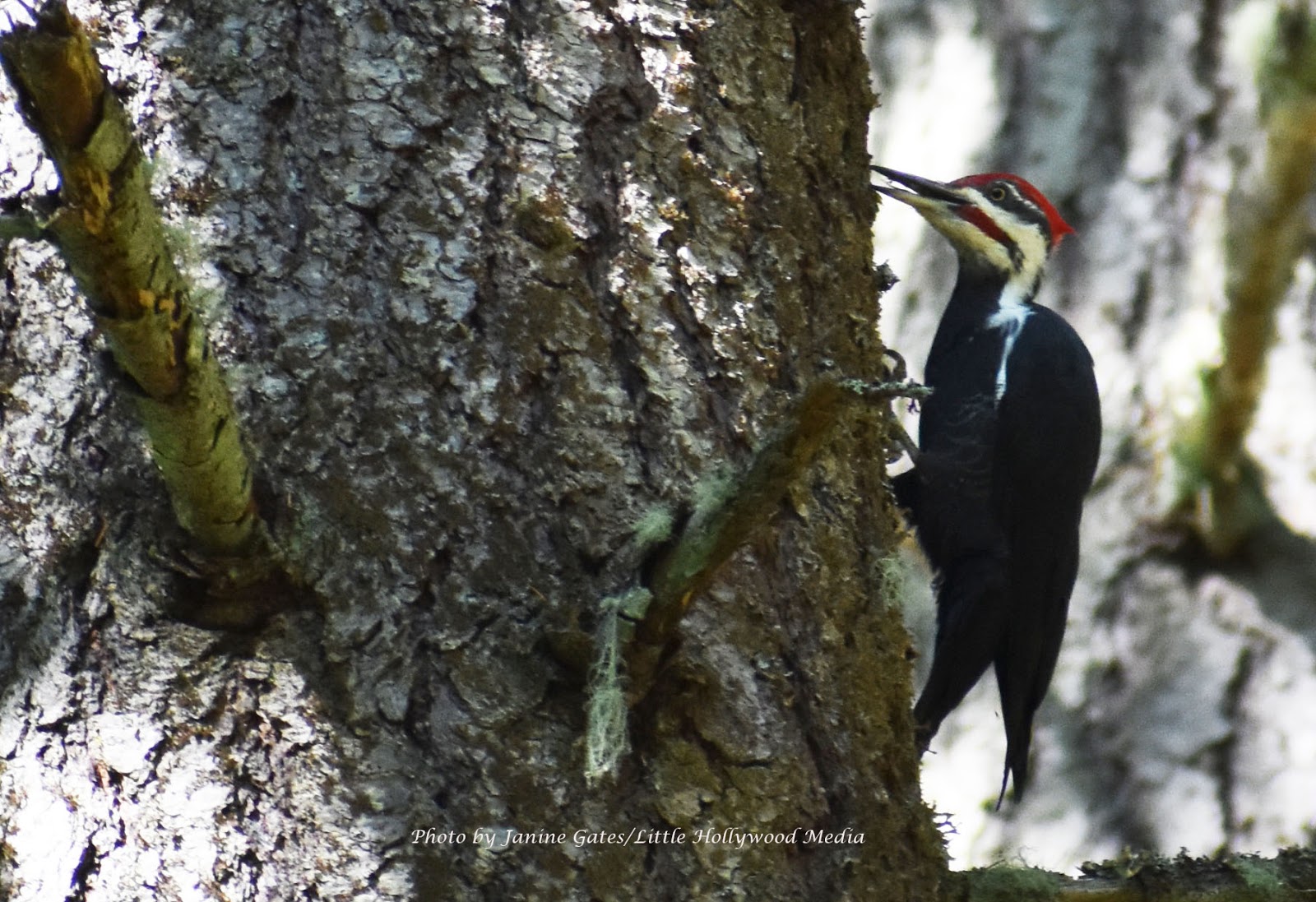
Above: Several pileated woodpeckers were heard boring into snags and trees well before they were seen along the peaceful Sequalitchew Creek trail in DuPont last week. Two industrial warehouses and related facilities are proposed to be built 100 feet from the creek.

Public Hearing Tentatively Set for October 24


Public Comments Highlight Area’s Historic Significance, 9th Cavalry Buffalo Soldiers Held Maneuvers, Camped at Sequalitchew

By Janine Gates
Little Hollywood

A public hearing for an industrial development proposal near Sequalitchew Creek in the City of DuPont, Pierce County, is tentatively set for October 24, 1:00 p.m., at DuPont City Hall, 1700 Civic Drive, DuPont.

The public is invited to attend and present oral and written testimony to a city hearing examiner on the proposed project.

DuPont Industrial Partners, LLC is proposing to build two warehouses totaling 258,400 square feet on a vacant, 21 acre wooded parcel near Sequalitchew Creek and the Sequalitchew Creek trail in DuPont.

Based on the applicant’s materials:

·      The buffer between the proposed project and Sequalitchew Creek is 100 feet.

·      Nearly 400 healthy trees will be removed from the site, called “Lot Y.” Of that number, 76 landmark trees are in the area, 49 of which will be removed. Landmark trees are described in ordinances as significant. One of the 49 landmark trees is a large Oregon white oak tree.

·      Over 70 percent of the property is expected to become impervious surface.

·      Approximately 444 total daily trips are expected to be generated on a typical weekday. Noise from vehicular traffic to and from the site would be present with possible operating hours of 24 hours a day, seven days a week.

·      The current comprehensive plan designation for the area is Sequalitchew Village Planning Area. The current zoning designation for the site is Manufacturing Research Park (MRP) and buildings on site may be as high as 70 feet.

The first comment deadline for state agencies, tribes, and the public to weigh in on the project was September 12. 

Jeff Wilson, community development director for the City of DuPont, has compiled the comments and will likely issue a Mitigated Determination of Non-Significance (MDNS) for the project. 

Above: Mothers and children walk along the Sequalitchew Creek trail. The trail leads directly to Puget Sound and is popular with families, photographers, and bird watchers.

History of Buffalo Soldiers at Sequalitchew, American Lake

Earlier this week, Little Hollywood reviewed the City of DuPonts two inch thick file of community comments and concerns regarding the proposed project. 

Most letters highlighted the historic significance of the area and called for its preservation. Others requested increased buffers from the creek and noted other environmental considerations.

Jackie Jones-Hook, executive director of the non-profit Buffalo Soldiers Museum in Tacoma, is opposed to the proposed development. 

She provided the City of DuPont historical information about the Buffalo Soldiers and intends to testify at the public hearing on October 24.

In an interview with Little Hollywood, Jones-Hook says the area is part of a proposed Nisqually-Sequalitchew Historic District and lies in the cradle of U.S. military history in the Puget Sound region.

In 1866, Congress established six all-black regiments, each with about 1,000 soldiers.

Known as “Buffalo Soldiers,” the regiments were comprised of former slaves, free men and Civil War soldiers. They helped rebuild the country, patrolled the remote western frontier, protected settlers, built forts and roads, and mapped the wilderness in the West.

The first stewards of our national parks were these Army cavalry troops before there was a National Park Service. The last Buffalo Soldier units were disbanded in 1944.

Of local significance, over 4,000 troops from the regular U.S. Army and National Guard units from Washington, Oregon, and Idaho were organized into opposing armies around American Lake and engaged in mock battles and skirmishes.

Members of the 9th U.S. Cavalry Regiment served in the 1904 maneuvers at American Lake, the first in a series of large scale military maneuvers. The success of those maneuvers led to additional maneuvers in 1906, 1908, 1910, and 1912.

Jones-Hook said she is in the process of implementing a federal grant her museum just received to educate at-risk, under-served and under-represented children about the Buffalo Soldiers.  

Field trips for the children will include the areas of Fort Lawton, now Discovery Park, in Seattle and Sequalitchew Creek, where the soldiers camped. Stables for the horses were also located there.

Our curriculum will talk about the Buffalo Soldiers lifestyles and survival skills, and how they were able to live off the land by eating berries and drinking water out of the creek. It will also provide the children an opportunity to visit the actual sites where the Buffalo Soldiers served. You can talk about it, but actually being there puts you in a totally different mindset. 

“For so long we were denied the ability to read and write, so its a story thats not well told, but the story of the Buffalo Soldiers is the greatest tribute in the world to the dedication, strength, and pride of black men,” she said.


Above: A display at the Buffalo Soldiers Museum in Tacoma describes the 9th and 10th Cavalry also known as the Buffalo Soldiers, and their military maneuvers at American Lake in 1904, 1908, 1910 and 1912.

Archaeological Investigations

Although artifacts have been found on the site proposed to be developed, the area has been extensively disturbed over the years.

In its comment letter, the state Department of Historical Preservation inquired about the relocation of the Methodist Mission marker and possible interpretive signs explaining the history of the temporary encampment of the Buffalo Soldiers.  

There is currently no marker or mention of the Buffalo Soldiers anywhere along Sequalitchew Creek. 

The agency also wondered if the project proponent has plans to retain the section of narrow gauge railroad that was recorded during a cultural resource survey a few years ago.

Operation of the DuPont Powder Works in the early to mid-1900s included use of part of the property as a burning ground dump from the 1930s until 1945. 

More disturbances occurred during archaeological investigations and related artifact collection between 1989 and 2005, and environmental remediation activities in 1999 and 2000.

Regarding the 9th U.S. Cavalry site archaeological investigations in 1989 and 1991, archaeologist Guy Moura and his team recovered over 800 artifacts.

Washington State archaeologist Robert Whitlam indicated in a 1998 letter to noted archaeologist Richard Daugherty that the site was potentially eligible for listing on the National Register of Historic Places. He also recommended further work to define the boundaries of the Native American and Buffalo Soldier occupations.

The Nisqually Indian Tribe expressed no concerns about the development except in the event human remains or cultural and historic resources were found.

Above: A marker indicates the likely location of the Methodist Episcopal Mission, the first non-permanent, Euro-American settlement on Puget Sound. Built in 1839, the Mission burned down in 1842. The location lies in the location of Warehouse B of the proposed project.

A September 5 story by Little Hollywood, Sequalitchew Threatened by DuPont Warehouses, is at http://janineslittlehollywood.blogspot.com/2018/09/sequalitchew-threatened-by-dupont.html 

For more information about the property and to stay up to date on possible public hearing meeting changes, contact Jeff Wilson, City of DuPont Community Development Director and City SEPA Official, at jwilson@dupontwa.gov or (253) 912-5393, or go to www.dupontwa.gov.

For more information about the Ninth and Tenth Cavalry Buffalo Soldiers Museum in Tacoma, go to www.buffalosoldierstacoma.org or email soldiersmuseum@aol.com. The museum is located at 1940 South Wilkeson Street, Tacoma, Washington 98405.

Monday, September 3, 2018

Chambers Prairie Grange Starbucks Open Soon


Above: Luis Smith of Shelton steps back to check the position of a tree he just planted at the site of a new Starbucks at the former Chambers Prairie Grange on Yelm Highway in Tumwater. Opening day could be as soon as September 20, said property owner Tom Schrader.

By Janine Gates
Little Hollywood

A new Starbucks in the former Chambers Prairie Grange in Tumwater may be open for business as soon as September 20, said property owner Tom Schrader earlier this week. 

The 108 year old building is located at 1301 Yelm Highway on the corner of Yelm Highway and Henderson Boulevard.  

Bought by Schrader from the Washington State Grange in 2015, the building had sat neglected and unused for years, but still retained its historic character and structural integrity. 

After a series of messy misunderstandings between Schrader and the city, Schraders original vision of lightly converting it to a neighborhood cafe and bistro began to disappear. 

Property rezones, negotiations and compromises between the city and Schrader are documented in several articles by Little Hollywood.

Earlier this week, contractors working for Starbucks were busy working on the inside and on a large outdoor deck jutting from the opened up western side of the grange. 

Meanwhile, Schrader was busy outside planting several liriodendron tulipifera (tulip tree) with two employees. 

Although several large trees were cut down, Schrader said he left 26 trees on the property. Two stormwater retention ponds were created to mitigate the impact of new impervious surfaces and make up for the work performed by the large Douglas firs and maple trees that were on the property.

The property now has 30 parking stalls. The drive thru lane, a non-negotiable feature for Starbucks, can accommodate nine vehicles before traffic starts spilling out onto Yelm Highway. 

The drive thru access points provide both left and right ingress and egress on both Yelm Highway and Henderson Boulevard.

In a nod to the former grange’s roots as a community center for farmers, Schrader has placed authentic, rusty farm equipment on the property, sourced from Rochester.

In past interviews, Schrader said numerous national businesses contacted him about the high-profile corner, but chose Starbucks because it is a coffee business where people also enjoy meeting. 


Above: With Tomás Wilson of Shelton, Tom Schrader loads up another liriodendron tulipifera (tulip tree) to plant on site. 

A Brief Chambers Prairie Grange History

Historically, granges served as the community center for social, agricultural, educational and political activities for farmers.

According to the state Department of Archaeology and Historic Preservation, the Chambers Prairie Grange No. 191 was first organized in 1906. Grange members built the wooden, one story 5,668 square foot building through donated work on land donated by the Wickie Family.

The Chambers Prairie Grange, completed in 1910, was one of the first in Thurston County. It is not on any local, state or national historic register. 

When Schrader bought the grange, he quickly announced his vision for it to be a neighborhood café and bistro. 

Wanting to save the building’s historic character and integrity, Schrader received a successful rezone of the property from single family low density to community service.

Because the building sits in the city’s right of way and the city has future plans to expand the intersection, city staff made some development concessions with Schrader in support of his efforts to save the building. 

Intent on building a new 4,000 square foot building after entering into negotiations with Starbucks, Schrader declared that the building could not be saved and began dismantling the interior. 

City staff told Schrader he would have to conform to land use regulations for new construction if he was going to destroy the building. 

Schrader purchased the adjacent property from The Farm Homeowners Association and received a rezone for that property in 2016. 

Through negotiations with the city, a developer’s agreement was hammered out and Schrader moved forward with his new plans. 

For more photos and information about the history of the Chambers Prairie Grange, the building’s purchase by Tom Schrader, and related land use discussions with the City of Tumwater, go to Little Hollywood, https://janineslittlehollywood.blogspot.com and type key words into the search engine.


Friday, July 21, 2017

Chambers Prairie Grange May Be Saved – Again


Above: Chambers Prairie Grange building owner Tom Schrader arrives at his property at the intersection of Yelm Highway and Henderson Boulevard in Tumwater. Instead of demolishing the former grange, Schrader now plans to turn it into a Starbucks. He is in the process of purchasing the adjacent property, above, from The Farm Homeowners Association.

Starbucks Still in the Picture, Possibly in the Grange

By Janine Gates
Little Hollywood
http://www.janineslittlehollywood.blogspot.com
A Little Hollywood Land Use Investigation - Continued

In late April, Little Hollywood broke the news that Chambers Prairie Grange property owner Tom Schrader was planning to demolish the 107 year old former grange and that he had entered into negotiations with Starbucks to build a new 4,000 square foot building on the Tumwater property.

The news surprised, confused, and angered many Tumwater city officials and community members.

In early May, City of Tumwater Mayor Pete Kmet and several city staff members met with Schrader to discuss the future of the building and negotiated a series of understandings regarding right of way, new building requirements, a rezone of the adjacent acreage currently owned by The Farm Homeowners Association, a proposed drive thru, and setbacks.

Schrader has not yet filed a formal land use application or submitted final designs to the city but now, instead of demolishing the grange and building a stand-alone building, the grange is expected to be turned into a Starbucks, says Schrader.

Time will tell. The building is not listed on any historic register.

In his haste to move the project along, Schrader had filed a request for an emergency rezone of adjacent property belonging to The Farm in June but Mayor Kmet and the city didn’t see a way to declare it an emergency if Schrader was going to raze the grange and build a new building. 

City staff negotiated several sticking points with Schrader so, as far as the city is concerned, the former Chambers Prairie Grange can stay where it is, and does not have to be moved to accommodate future expansion to the Henderson Boulevard and Yelm Highway intersection.

Schrader purchased the grange building in 2015 and announced he wanted to save it and convert it into a neighborhood coffee and sandwich shop. After verbal miscommunications with the city and receiving a rezone of the property in late 2016, he declared that the building could not be saved and began dismantling the interior.

As part of the negotiations to spare the grange from outright demolition, the Tumwater city council approved the sponsoring of a comprehensive plan map amendment and the associated rezone of an adjacent property owned by The Farm Homeowners Association, but not without some questions and comment, at their meeting Tuesday evening.

Getting the amendment and rezone on the city’s work docket allows staff to study the issue.

The Farm and a Proposed Rezone

The area being considered for a rezone is part of The Farm Homeowners Association property to the west and south of the grange on Yelm Highway.

Once an agricultural area, the grange is now surrounded by a tangle of different zoning categories.

Schrader has long been interested in this property in order to have more space to develop his property.

The purchase is still not final, but The Farm Homeowners Association community approved the sale of its property to Schrader in concept on May 25. The vote was 81 to 8 in favor of the sale, said Schrader.

Depending on the outcome of a property survey, the property is between 18,000 and 22,500 square feet in size and will cost Schrader about $100,000.

A developer agreement between Schrader and The Farm is also being prepared and expected to be finished next month. The city is drafting the agreement and must approve it before the rezone is granted.

The proposed amendment would change the Comprehensive Plan map designation of a portion of the parcel from Single Family Low Density (SFL) to Public Institutional (PI) and the zone district designation from Single Family Low Density (SFL) to Community Services (CS) to match the comprehensive plan amendment and associated rezone done for the former grange property in 2016.

Once the docket becomes final, staff will review the proposed amendment as part of their 2017 long range plan work program. The final docket review will start with a Planning Commission review and recommendation process that will begin in September.

At Tuesday night’s meeting, Councilmember Nicole Hill wondered about setting a precedent for rezoning an open space tract to a different use. Staff agreed that the question was a “worthwhile concern,” but said that it is not clear from the record how it became open space, and that it is a remnant area fenced off from The Farm subdivision.

Members of the council and the Tumwater Historic Preservation Commission have been polite, but have indicated that they felt duped into the 2016 rezone from single family low density to community service, having been swayed by Schrader’s enthusiasm and promise that the grange and its historic character and integrity would be saved.

At a previous council meeting, Kmet admitted they all should have asked more questions and asked for a developer’s agreement at the time of the rezone of the grange property.

Schrader says Starbucks is willing to wait for the proposed rezone process to be complete. A few months ago, they did not prefer to be in the old grange building, but now, he said, they may be open to ideas.

Schrader went to Seattle on Tuesday morning to meet with Starbucks representatives to discuss his latest architectural drawings and ideas. Schrader says he wants Starbucks on the top floor of the grange, and he will keep the basement for parties and events.


Above: The basement of the Chambers Prairie Grange as seen in November, 2015.

Along with other changes, Schrader says that he has already taken out the floor and walls, and the stage will be taken out. In a 2015 interview, Schrader said he would save the stage.

With the historic integrity of the building and its surroundings slated to be dramatically altered, including the cutting down of at least three large Douglas fir trees and one maple tree to make a drive thru, it is uncertain whether or not the deal will be worthwhile to some historic preservationists.

At their last meeting, members of the city’s Tumwater Historic Preservation Committee discussed their desire to tour the property and see the inside of the grange.

Mike Matlock, community development director for the City of Tumwater, says the city is only interested in exterior appearances.

Dave Nugent, president of The Farm subdivision, says members of The Farm want the exterior appearance of the grange retained as a notable landmark, saying the grange is integral to his neighborhood.

Grange members built the hall on land donated by the Wickie Family, completing the structure in 1910, one of the first in Thurston County.

When Nugent was informed that Schrader visited Starbucks representatives with designs showing Starbucks in the grange, the news concerned him.

“Putting Starbucks in the grange without losing its historic integrity is something. The more he starts to modify the building the more he’ll lose the protections the city has offered him….It’s certainly gone back and forth. It is our hope that the grange is kept there. We want to see that corner taken care of,” said Nugent.

Nugent said Schrader has a lot to get done before The Farm sells their property to him, but strongly believes Schrader always intended to save the grange.

As for the building’s interior, he hopes Starbucks will want to tell the story of the grange and its history through pictures and design.

Nugent says he knows some trees will be lost and doesn’t think the neighborhood will be impacted. With the proceeds from the sale of the property, The Farm intends to create a barrier between the subdivision and the property to minimize noise and light pollution, and make other safety and beautification enhancements to the neighborhood.

“The sale of our property (to Schrader) is fortuitous. Neighbors are looking forward to the whole idea of going over there to get coffee and pastries and have it be a gathering spot,” said Nugent.

Above: A lot of traffic passes in front of the Chambers Prairie Grange on Sunday afternoon at the intersection of Yelm Highway and Henderson Boulevard. Construction is ongoing for an active senior living facility across the street.

The Art of the Deal...Tumwater Style

In a development process that sounds a bit like learning how sausage is made, communications between Schrader and the city have improved in the last few months, particularly after an early May meeting resulted in negotiations laid out in print.

In a May 6 email, Mayor Pete Kmet wrote Schrader that if he wants to preserve the current building in place, the city is willing to support a vacation of a portion of the city's right of way on Henderson that the building encroaches on, in exchange for additional right of way on Yelm Highway where the stairs are, with removal of the stairs.

The city is also willing to support a waiver to the twelve foot sidewalk requirement along Henderson and Yelm Highway and reduce this to a six foot wide sidewalk and support a waiver to reduce the ten foot building setback and landscaping requirement so the grange does not need to be moved.

Regarding a drive thru, city code prohibits the placement of a drive thru window between a building and the street. Kmet said the city would not support a variance from this requirement. 

“With acquisition of the Farm’s parcel, it appears possible to achieve sufficient queuing to enable provision of a drive thru window on the west side of either the existing or a new building, he wrote. 

The rezone of The Farm parcel and vacation of a portion of the right of way on Henderson Boulevard are dependent on city council approval. Similarly, any variances depend on a hearing examiner decision.

Schrader is thrilled with the negotiations with the city, and if he gets the rezone, says his intent is to combine the properties and provide full service access points with left and right ingress and egress on both Yelm Highway and Henderson Boulevard.

“This is huge - now the entrance and exit for this corner is much easier for everyone….Things sometimes have a way of coming back around for the good. I will be keeping the grange, and buying the extra property…I can now go back to doing what I had always hoped for, and that is to restore and keep the grange,” Schrader said.

For more photos and information about the Chambers Prairie Grange and its history, and Tom Schrader, and go to Little Hollywood, http://janineslittlehollywood.blogspot.com and type keywords into the search engine.

Sunday, January 29, 2017

Barner’s Home a Total Loss Due to Fire


Above: The home of beloved community member George Barner, Jr. was engulfed in flames Sunday morning. Barner, who has lived at the home for several decades, was not home at the time. Barner arrived at the scene during the fire and was greeted and assisted by many friends.

By Janine Gates
Little Hollywood

The westside home of former port commissioner and beloved community member George Barner, Jr. is a total loss due to fire. 

The burning home, located in the 800 block of 5th Avenue SW, was first called into the Olympia Fire Department by a neighbor Sunday morning at 11:11 a.m. Barner was not home at the time.

Barner has been staying in a local hotel awaiting some repairs on the home, which was the scene of an attempted robbery two weeks ago. It took time to determine where Barner was located.

After that was determined, while the house was still on fire, Barner was brought to the scene and was greeted and assisted by many friends, who had also arrived and gathered on the street.  Barner said he had been home on Saturday and nothing was out of the ordinary.

According to a report by Olympia Fire Department Deputy Fire Chief Greg Wright, fire units reported seeing a smoke column at 11:14 a.m. before their arrival on the scene at 11:16 a.m. 

Several community members initially speculated that the nearby Capitol House Apartments, the former St. Peter’s Hospital on Sherman Street, was on fire.

Firefighters were unable to enter through the front door due to obstructions inside but did make access from a side door.  Smoke was down to the floor of the second story as firefighters tried to enter. Unable to make any progress due to the amount of items inside and the heavy fire, crews switched to a defensive mode from outside the house at 11:30 a.m.  
 
Ammunition for guns in the home that Barner kept for target practice was stored in the house and were heard going off for a significant amount of time, also keeping firefighters back. The fire continued to burn despite water being applied from a crane on the fire engine.

Above: Firefighters were unable to enter the home while the home burned. A considerable amount of ammunition stored in the home, heard going off for quite some time, also kept firefighters and the public back from the scene.
 
The brick walls of the 1920’s vintage home held the fire in and firefighters kept the fire from spreading to nearby trees and other buildings.  An attached lower level garage was relatively undamaged by fire.

The Olympia Fire Department responded with four engines, one ladder truck, two medic units, and a command unit.  There were no reported injuries.

Fire crews worked the fire until about 3:00 pm. One fire engine and crew will remain on the scene to watch for hotspots and secure some vehicles that were in the garage and driveway. 

An investigation into the cause of the fire will begin on Monday.  

Above: George Barner, Jr. speaks with Olympia fire fighters Sunday afternoon. Barner's house, with the roof collapsed, is a total loss. Little Hollywood told Barner that he is loved and the community will help him with whatever he needs. 

Thursday, December 31, 2015

Olympia Heron Preservation Group Becomes Land Trust

Above: With the donation of two land parcels on Olympia’s westside by Alicia Elliott, the Olympia Coalition for Ecosystems Preservation (OlyEcoSystems) organization is now applying for certification as a land trust. The Pacific Great Blue Heron makes nests in these trees during the breeding season of February through August and visit at other times. The nests, seen here, make the trees look like the Truffula trees in the Dr. Seuss book, The Lorax. Daniel Einstein, chair of OlyEcoSystems provided Little Hollywood a tour of the property on Wednesday. 

By Janine Gates

The powerful story of a few dedicated community members with the Olympia Coalition for EcoSystems Preservation (OlyEcoSystems), a group on a mission to save and restore a local heron rookery on Olympia’s westside, continues to unfold.

Alicia Elliott, Olympia, recently donated to the group two parcels, totaling 4.7 acres, that she acquired last year to protect Olympia's lone colony of Pacific Great Blue Heron. 

With her donation, made in early December, OlyEcoSystems announced this week that it is becoming a land trust, thus protecting the woods in perpetuity. Elliott is a board member of the group.

The rookery parcel is about 1.9 acres, and the adjoining parcel, which will act as a buffer for the rookery, is about 2.8 acres.

In two years’ time, when the group is eligible to do so, it will apply for certification from the Land Trust Alliance, said Daniel Einstein, chair of OlyEcoSystems, on Wednesday as he gave Little Hollywood a tour of the property.

“Certification is going to be good for us…it will hopefully invite more donors, and we can turn those donations into land transactions. To be eligible for certification, we need to hold two or more parcels for two years,” said Einstein.

Land trusts enhance the economic, environmental and social values of their communities, and the support of the Land Trust Alliance will be crucial to the local organization for fundraising, legal support, and other benefits.

Founded in 1982, the Washington D.C. based Land Trust Alliance represents more than 1,100 member land trusts nationwide.

According to a 2010 survey by the Alliance, Washington State has 37 state and local land trusts, owning a combined 32,852 acres. The Alliance will conduct another survey in early January, the results of which will be available in Fall of 2016.

Above: Daniel Einstein today on the property adjacent to the rookery near Dickinson Avenue on Olympia’s westside. The property provides a critical buffer habitat in an urban setting for Pacific Great Blue Herons, and is also home to Cooper’s hawks, peregrine falcons, coyotes, red fox, deer, and many small mammals and reptiles.

Grants Focus on Restoration, Water Quality

Rounding out a successful year for the group, mature alders on the rookery property are now freed of 100,000 tons of ivy, thanks to teams of volunteers at regular work parties, who have also replanted the area with ferns, Oregon grape, and vine maple. 

The property also used to be a holly farm, and about 40 mature holly trees have been taken out because it too is an invasive species.

“The holly trunks are so big, it looks like we’re logging, but we’re not….It’s going to take some years to get it where we want it, but it’s really important to get it out now,”  said Einstein.

With a $10,000 grant from the Rose Foundation, they will be putting in 5,000 additional plants on the property.

Einstein pointed out the direct, stunning view of Mt. Rainier and explained that the group will be placing a picnic table and benches here for the public.

Einstein said the organization is also looking forward to creating a rain garden and planting 2,000 Pacific Willows and vine maples around it that will line rock-lined swales for untreated stormwater from Dickinson and Hays Avenues.

“In our neighborhood, all stormwater goes into Budd Inlet. None of it goes to LOTT - not a drop…most of it just runs off through the woods, or is dumped there by the city through a pipe. The woods act as a filter for the whole system as it moves through to Budd Inlet…. so our grants focus on water quality,” said Einstein.

The LOTT Clean Water Alliance is the regional wastewater system comprised of the cities of Lacey, Olympia, Tumwater, and Thurston County.

Besides stormwater issues, legacy dioxins from Olympia’s industrial past are known factors along West Bay Drive. The OlyEcoSystems property is directly upland of the former Reliable Steel on Budd Inlet, and property owned by local architect Glenn Wells. 

Einstein says that for now, the organization is focused on restoring and maintaining what it has, but if purchased by the group, the Wells property could provide neighborhood connectivity to and from West Bay Drive. Wells is asking a price that is double its assessed value of $100,000, says Einstein.

OlyEcoSystems currently pays about $1,500 in property taxes on the rookery parcel and received a conservation easement on it from Thurston County. 

“We were able to get that because of the heron’s nests. That reduced our property tax by 70 percent on this parcel. We could have gotten more of a property tax reduction, but we don’t allow year round public access because of the rookery….If it were a city owned property, there would be no way to close it, so that’s one reason we prefer to hold onto the property ourselves,” said Einstein.

Herons are sensitive to disruptions, and their breeding season starts in February and runs through August. The public is not allowed at the site during those months. The site has been used by herons for about 35 years, and thirty herons came back this past February during the breeding season. The herons also visit in the off breeding season.

“This year, they spent two to three months here, then were chased away by eagles to a location about 800 feet south of here. They were chased again and ultimately ended up on the other side of the inlet….that site is also part of their memory. They move around as needed based on safety and other reasons," said Einstein.

The OlyEcoSystems group has a solid vision and plan to continue their environmental efforts, with the community's help, for years to come.

“As we transition to a land trust, we also intend to remain a forceful advocate for habitat and water quality in our urban core,” said Einstein.

“The idea is that we need to preserve these trees and create a habitat for the herons that gives them flexibility to adapt, particularly as we change their landscape as we become more urbanized. That's why we don’t just want these two parcels, we want as much of the woods as we can get. We’d love to buy the woods on the other side (of the inlet), and work on the shoreline, where they can forage….There’s a connection between the fish and the birds….”

January Work Party

On Saturday, January 2nd, 2016, from 10:00 a.m. – 2:00 p.m., volunteers will be clearing ivy from the trees on the parcel in back of Hays Avenue, and clearing ivy off the remaining flat areas on the parcel at the east end of Dickinson Avenue NW. What to bring: gloves, a rain coat, hand saws, chain saws and clippers.

February Fundraiser

The OlyEcoSystems annual fundraiser will be on February 27th at 7:00 p.m. at the Abigail Stuart House (Women's Club), 1002 Washington St. SE, in downtown Olympia. There will be live music, refreshments, beverages, and a silent auction of works by Olympia artists. The event is open to the public. The group says that even if you cannot make a donation,come and celebrate another year of successful advocacy for our environment.

Above:  Olympia's westside as seen from the Fourth Avenue bridge today. The rookery is directly upland of the Reliable Steel site located on Budd Inlet at 1218 West Bay Drive, as illustrated by the vacant metal warehouse on the right. The site was originally developed as a lumber mill. From 1941-2009, the site was used for boat building, steel fabrication, and welding. From 2010 - 2013, the former owner and the Washington State Department of Ecology investigated the site and found contaminants above state cleanup levels. In 2014, Ecology held a public comment period on a draft partial cleanup plan for the site. Under the plan, Ecology will clean up some contaminated upland areas of the site.


OlyEcoSystems is committed to environmentally restoring its 4. 7 acre property, but also has other goals related to improving the water quality and health of Budd Inlet. “…The time is now. OlyEcoSystems is dedicated to affecting public policy and educating the community, but there is no ignoring the fact that our window of opportunity is closing.” – OlyEcoSystems website.

Past articles about Alicia Elliott, the rookery, and OlyEcoSystems can be found at Little Hollywood, www.janineslittlehollywood.blogspot.com, by typing key words into the search engine.

For more information about the Olympia Coalition for EcoSystems Preservation, go to its website, www.OlyEcoSystems.org.